
Dress Manufacturer: Briefing Evening & Occasion Wear
Evening and occasion dresses fail on the small things: a neckline that gapes after beading, a lining that shows at the hem, a sequin that catches under the arm. Brief these five points and the sample round gets shorter.
- Specify fabric weight, not just fibre.
- Say how the lining is attached.
- Describe beading by area, not by “lots”.
- Give a base size and a size curve.
1. Fabric: weight and behaviour
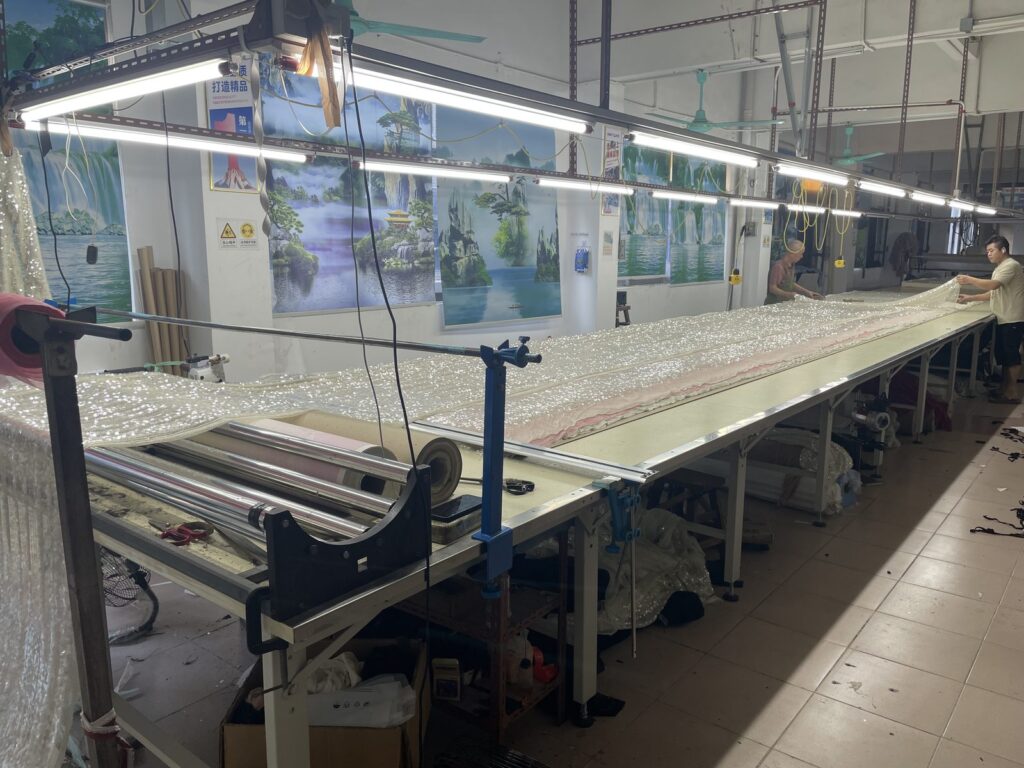
“100% polyester crepe” is a start, not a spec. Add grams per square metre and how the cloth should behave — fluid, structured, or holding a pleat. That single detail changes the pattern.
2. Lining is part of the design
State the lining fibre, the colour match and whether it is bagged out or attached at the waist. A lining that is slightly too short will pull the hem out of shape after pressing.
3. Beading: area and weight
Beading on a bodice behaves differently from beading on a sleeve. Describe the area, the bead size and whether the backing is net or tulle. Handwork is priced per piece, which is why heavy beading raises the minimum order.
4. Fit: base size and curve
| Spec | Why it matters |
|---|---|
| Base size | Pattern is drafted and graded from it |
| Size curve | Determines the grading and the panel cutting |
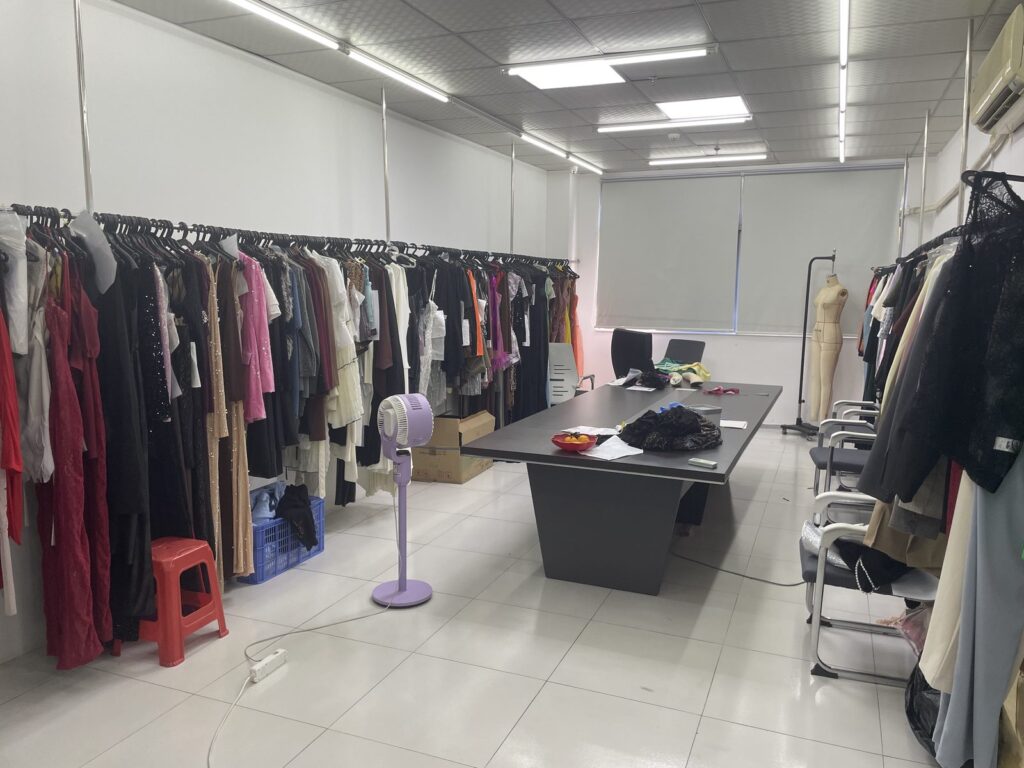
| Key measurements | Bust, waist, hip, length |
| Fit intent | Close, relaxed, or structured |
5. What to send with the brief
A reference sample or clear photos, the measurement chart and the fabric card. If you have worn a similar dress and know what failed, say so — that note saves a round.
Next step
See the evening dress range or read how OEM & ODM development handles sampling. Send your brief through Contact.