
Clothing Manufacturer or Trading Company? Spot the Difference
The first reply to your enquiry usually comes from one of two businesses: a factory that owns the floor, or a trading company that forwards your file. Both can quote. Only one can control your delivery date. Four questions settle it before you pay anything.
- Ask for the production address, not just the office.
- Ask who owns the cutting and sewing machines.
- Ask who signs the final quality report.
- Ask what happens when fabric arrives short or off-shade.
1. Where does the work actually happen?
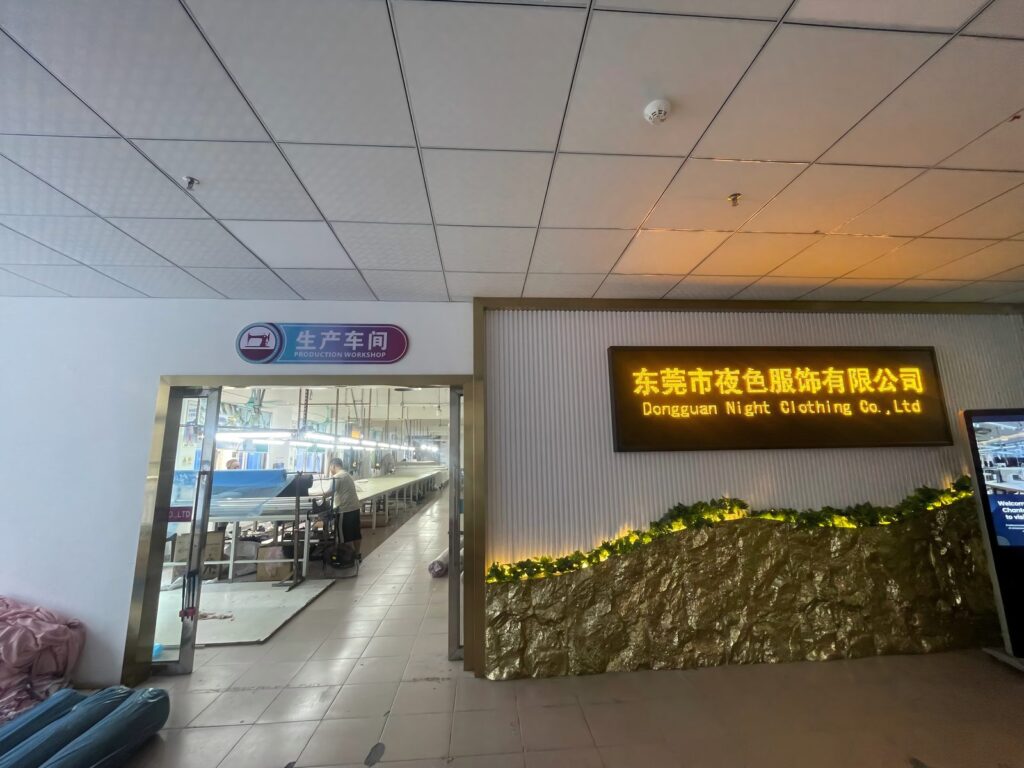
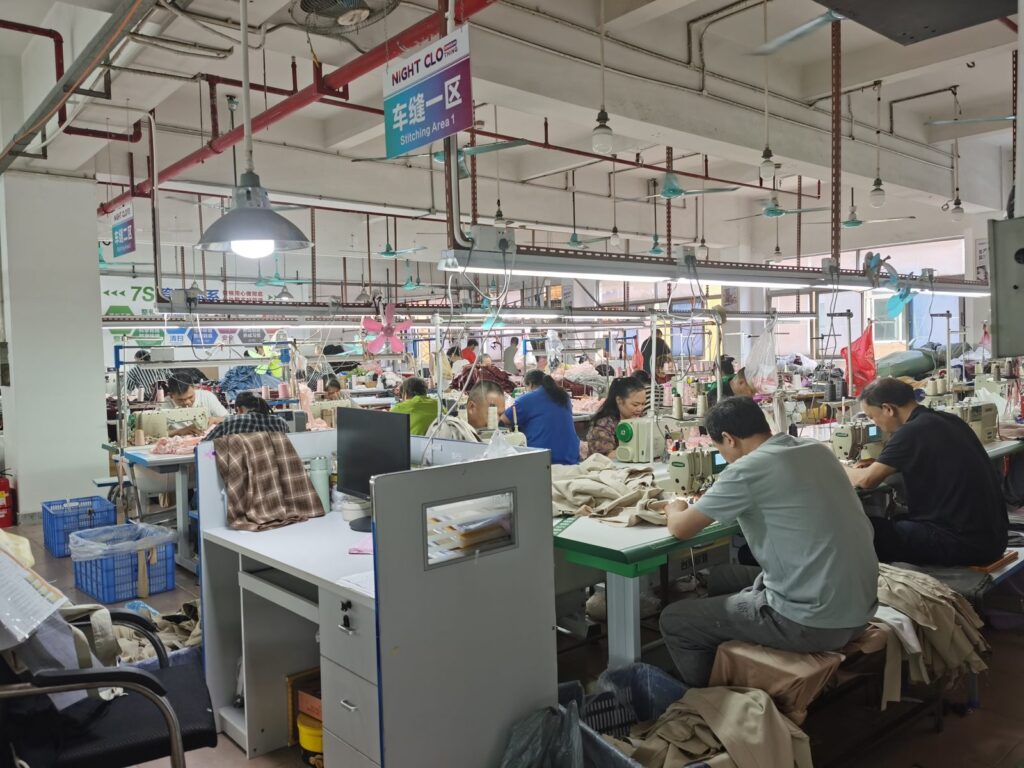
A factory gives you a workshop address and an unedited video walk down the line. A trading company gives you a city and a friendly account manager. Our own floor sits in Humen, Dongguan — 2F and 3F, Block D, Yongqin Industrial Zone — and buyers can request a live walkthrough before a deposit.
2. Who owns the machines?
Cutting, sewing, pressing and inspection equipment is expensive. A factory can show it, name it and explain its limits. We run a German automatic fabric cutter that improves cutting precision by around 70% and speed by around 300% versus manual cutting. A trading company cannot describe the settings because it does not run them.
3. Who signs the quality report?
Ask for the inspection form used before packing, and for the name of the person who signs it. In a factory the QC lead reports to the same management that runs production. In a trading company the report often travels through two inboxes before anyone acts.
4. What happens when something goes wrong?
Short fabric, a shade difference between dye lots, a late trim delivery — these are normal. The difference is who absorbs the problem. A factory can re-cut from stock and move a line. A middleman has to negotiate with someone else’s production manager while your ship date moves.
Quick comparison
| Question | Real factory | Trading company |
|---|---|---|
| Production address | Gives workshop address and a live walk | Gives city or office only |
| Machines | Owns and operates them | Resells capacity |
| QC signature | In-house QC lead | Forwarded report |
| Problem handling | Re-cuts or re-plans on site | Negotiates with a third party |
| Price structure | Fabric, trims, labour, packing | Adds a margin on top |
Red flags in the first reply
- A price before anyone reads your tech pack.
- An MOQ that changes when you ask for a second colour.
- No address, no company name, no amfori ID.
- Photos that never match the same room twice.
What to ask on the first call
Send one awkward but fair question — a construction risk, a tight date, a shade match. Fast, specific answers come from people who stand on the floor. That is the cheapest test you will ever run.
Next step
If you want the floor behind these answers, browse the Factory Show or read how our OEM & ODM service runs development. Then send a tech pack through Contact.